


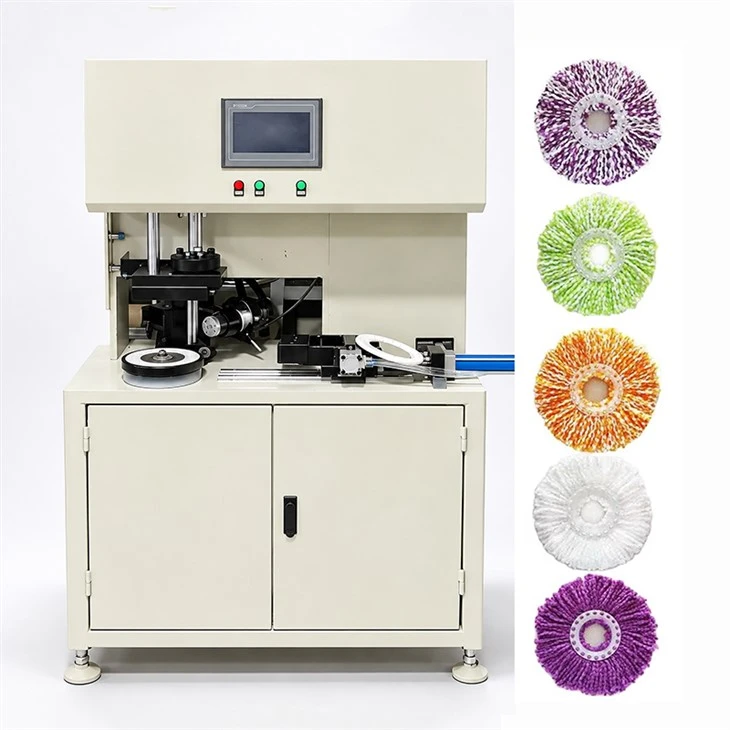
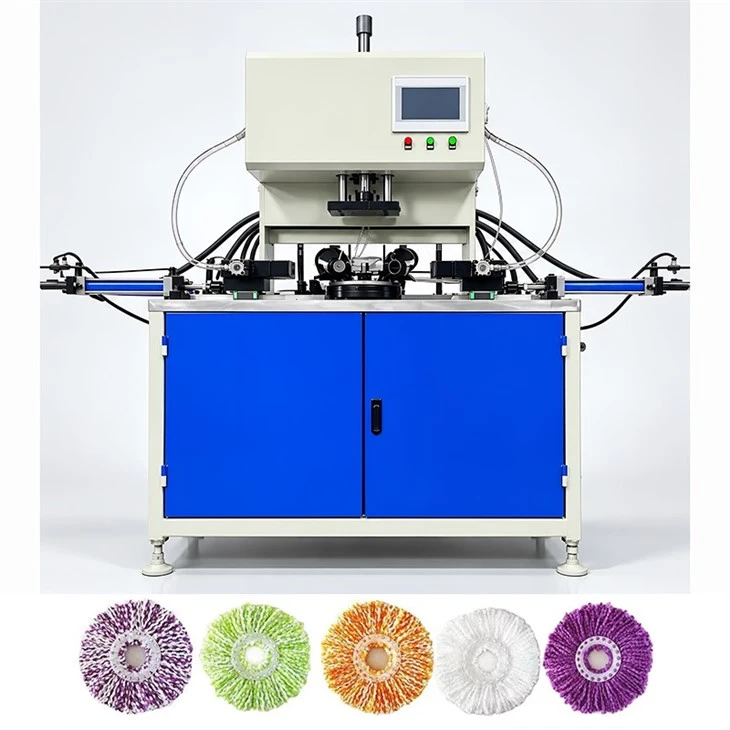

Two Models: One-Side and Two-Side
The only real decision is throughput. Both models produce the same head to the same standard; the difference is how many heads leave the machine per shift, and how much floor space and capital that requires.
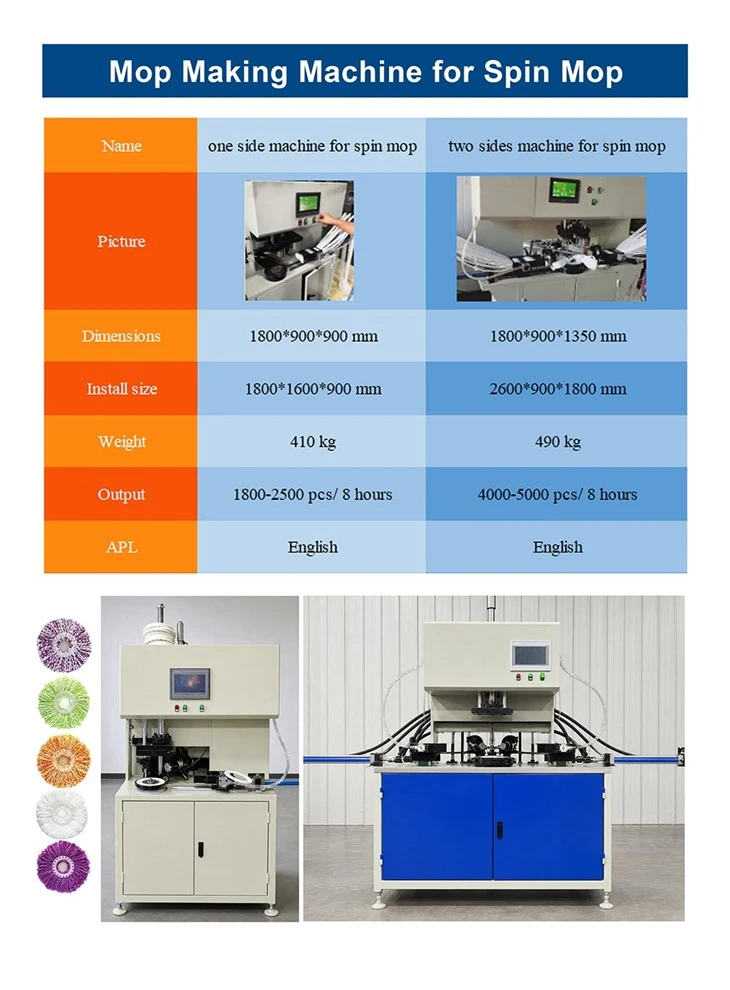
| Specification | One-side machine | Two-side machine |
|---|---|---|
| Output per 8-hour shift | 1,800 – 2,500 pcs | 4,000 – 5,000 pcs |
| Machine dimensions | 1800 × 900 × 900 mm | 1800 × 900 × 1350 mm |
| Installation footprint | 1800 × 1600 × 900 mm | 2600 × 1800 × 900 mm |
| Machine weight | 410 kg | 490 kg |
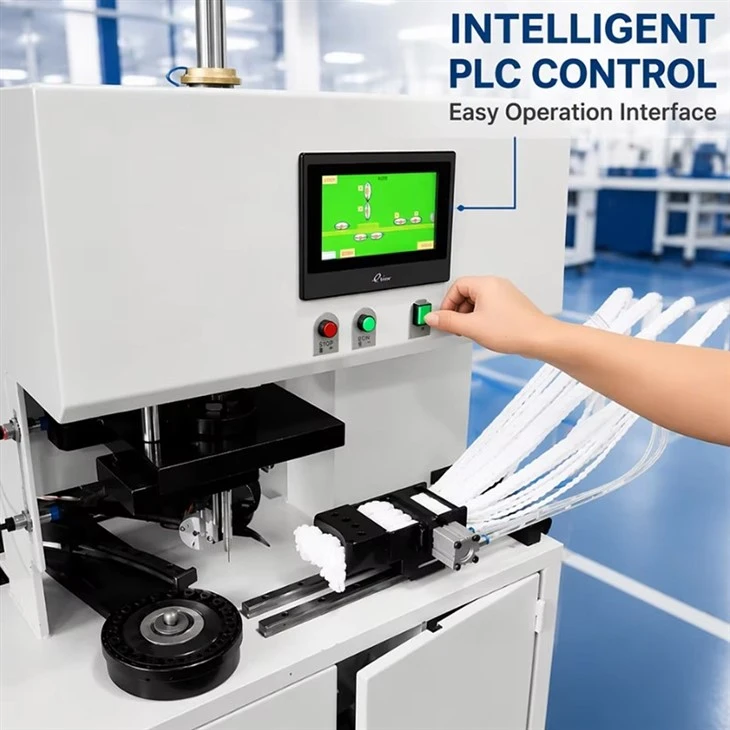
| Control interface | English | English |
Figures as published for the standard configuration. Output depends on head size, strip density and operator familiarity.
Which Model Fits Your Volume?
The useful comparison is not price, it is cost per head at the volume you can actually sell. A single shift of 22 working days converts the shift rating into a monthly capacity figure.
| Planning basis | One-side | Two-side |
|---|---|---|
| Per 8-hour shift | 1,800 – 2,500 pcs | 4,000 – 5,000 pcs |
| Per month, single shift (22 days) | ≈ 39,600 – 55,000 pcs | ≈ 88,000 – 110,000 pcs |
| Per month, double shift (22 days) | ≈ 79,200 – 110,000 pcs | ≈ 176,000 – 220,000 pcs |
| Best fit | New entrants, single-product lines, pilot production | Established mop assemblers, wholesale supply, OEM head contracts |
How to read this: if your monthly head requirement sits under about 40,000 pieces, the one-side machine already covers it on a single shift and leaves room for growth. Above that, the two-side model costs only around 50% more than the one-side unit while producing more than twice the volume, which is where the price difference stops mattering and capacity starts mattering.
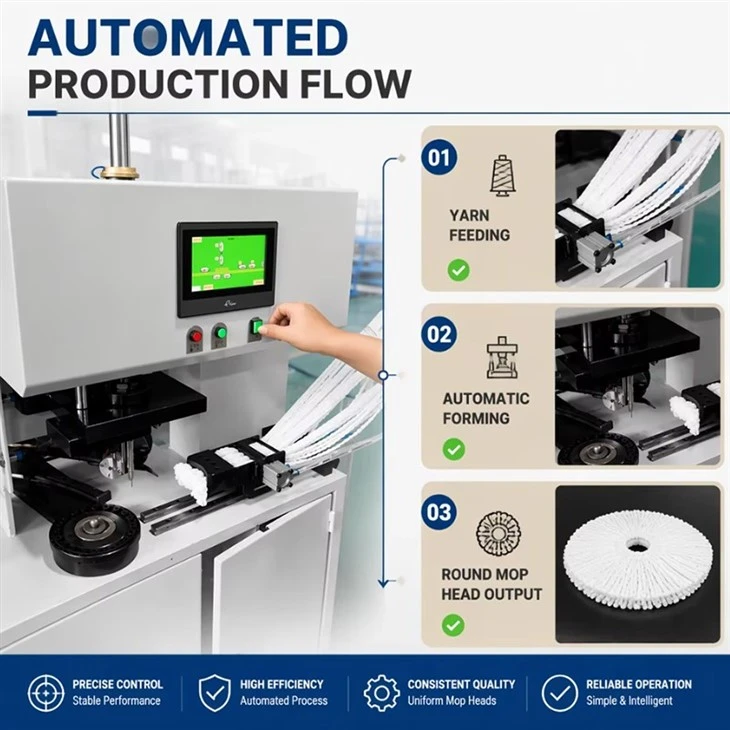
How the Production Cycle Runs
Five stages, from material loading to a finished refill. The operator's job is to keep the strip feed loaded and remove finished heads; the machine handles assembly.
|
01 Load the strip feedChenille microfiber strip is loaded onto the feed. Colour changes are made here, which is how one machine runs white, green, purple, orange and multi-colour heads. |
02 Head core positioningThe head core is located in the assembly position. Core size determines the finished head diameter, so a core change is a head-size change. |
03 Strip assemblyStrips are drawn, cut and secured into the radial sunflower pattern automatically. Strip density and length are set on the machine, not by operator judgement. |
|
04 Discharge and packThe finished head is discharged ready for trimming and packing. On the two-side model this runs on both sides of the machine at once. |
05 Colour and size changeoverSwitching colour means changing the strip feed. Switching head diameter means changing the core. Both are routine operator tasks, not engineering jobs. |
NOTE Operator attention, not labourBecause the cycle is largely automatic, the operator loads strip, changes cores and removes finished heads, and that work can be combined with packing in the same shift. |
What the Machine Produces
Head typeRound 360 spin mop refills Chenille microfiber strip construction Radial sunflower assembly pattern Single-colour and multi-colour heads Magic mop and spin mop compatible heads |
Where the heads sellSupermarket and hypermarket house brands Online marketplaces and e-commerce sellers Wholesale and distribution channels Janitorial and contract cleaning supply Replacement-refill aftermarket |
Head diameter, strip length and strip density are set by tooling and material specification. Confirm your target head specification before ordering so the machine is configured to it.
Before You Order: Site Requirements
A machine like this is only productive if the site is ready for it. These are the items to confirm before the container ships, not after.
| Floor area | Match the installation footprint of the model you choose, 1800 × 1600 mm for one-side or 2600 × 1800 mm for two-side, plus clearance for material in and finished heads out. |
| Floor loading | The machine weighs 410 kg (one-side) or 490 kg (two-side). Confirm your floor can take the point load, particularly on an upper floor. |
| Power supply | Electrical specification is confirmed at quotation against your local voltage and phase. Send your site conditions and the machine is configured to match. |
| Compressed air | Confirm whether your chosen configuration requires an air supply; this is stated in the quotation for your build. |
| Material supply | Secure a chenille strip and head core supply before the machine lands. Material consistency is what keeps output and head quality stable. |
| Operator | One operator per machine per shift. The English interface means training does not require a translator. |
Note on specifications: the figures on this page are the published standard for both models. Voltage, power rating and any air requirement are confirmed in your quotation, because they depend on your site.
Who Buys This Machine
Mop assemblers moving upBusinesses already assembling mops who currently buy heads in. Bringing head production in-house removes a supplier margin and a lead time at the same time. |
Cleaning-product brandsBrands sourcing heads from third parties who want control over head weight, strip density and colour to protect their product consistency. |
Refill-only suppliersSellers who supply replacement heads into the aftermarket, where volume is driven by installed mop base rather than by new mop sales. |
Why Buy the Machine Direct
Configured to your headThe machine is set to your target head diameter, strip length and density before shipment, rather than shipped at a default setting you then have to correct. |
Demonstration before paymentA working demonstration of both models can be arranged, including a run against your own head specification so output and quality are verified, not assumed. |
English interface as standardBoth models ship with an English control interface, so commissioning and operator training do not depend on translation support. |
Frequently Asked Questions
What is the difference between the one-side and two-side model?
The one-side machine produces 1,800 to 2,500 mop heads per 8-hour shift, weighs 410 kg and needs a 1800 × 1600 × 900 mm installation area. The two-side machine produces 4,000 to 5,000 heads per shift, weighs 490 kg and needs a 2600 × 1800 × 900 mm area. Both produce the same head to the same standard, so the difference is throughput, footprint and price.
How many mop heads can it produce per month?
At 22 working days per month on single 8-hour shifts, the one-side model produces roughly 39,600 to 55,000 heads and the two-side model roughly 88,000 to 110,000 heads. Running two shifts doubles those figures. Actual output depends on head size, strip density and operator familiarity.
What kind of mop heads does it make?
Round 360 spin mop refills, built from chenille microfiber strip in the radial sunflower pattern, including single-colour and multi-colour versions. These are the heads used on spin mops and magic mops. Head diameter and strip density are set by the tooling and the material specification you order against.
Is the control interface in English?
Yes. Both models are supplied with an English control interface, so operators can run, adjust and troubleshoot the machine without translation support.
What site preparation is needed before installation?
A level floor area matching the installation footprint, floor loading adequate for 410 kg or 490 kg, and a power supply matched to your local conditions. Electrical specification and any compressed air requirement are confirmed at quotation against your site, so the machine arrives configured for your supply rather than for a generic one.
Can I see the machine running before I commit?
Yes. A working demonstration of both models can be arranged, and a sample run can be filmed against your own head specification. Seeing output and head quality before payment is the sensible way to buy capital equipment at this price level.
Hot Tags: 360 magic mop head making machine automatic spin mop refill production line chenille mop head making equipment factory supply, China, manufacturers, suppliers, factory, price


