
Complete mops built to your spec & brand.
-
![Kentucky Mop With 400g Cotton Head]()
-
![Portable Handheld Microfiber Duster With Soft Fluffy Head For Car Dashboard Air Vent Narrow Gap Keyboard And Furniture]() Portable Handheld Microfiber Duster With Soft Fluffy Head...This is a short-handled microfiber duster for cleaning car interiors and indoor surfaces. The head is made of soft microfiber filaments that pick dust up and hold on to it, so dust is lifted off theread more
Portable Handheld Microfiber Duster With Soft Fluffy Head...This is a short-handled microfiber duster for cleaning car interiors and indoor surfaces. The head is made of soft microfiber filaments that pick dust up and hold on to it, so dust is lifted off theread more -
![Telescopic Pole Up To 240cm Microfiber Head High Corners Ceiling Fans Blinds Long Handle Duster]() Telescopic Pole Up To 240cm Microfiber Head High Corners ...A microfiber duster that extends to 240cm, so ceiling fans, high shelves, wall tops and window frames are cleaned from the floor instead of from a ladder. The head bends to follow the surface, andread more
Telescopic Pole Up To 240cm Microfiber Head High Corners ...A microfiber duster that extends to 240cm, so ceiling fans, high shelves, wall tops and window frames are cleaned from the floor instead of from a ladder. The head bends to follow the surface, andread more -
![120cm Extendable Steel Pole Chenille Microfiber Wet And Dry Cleaning Household Flat Mop]() 120cm Extendable Steel Pole Chenille Microfiber Wet And D...A flat mop built so that the part which wears out is the part you can replace. The chenille head presses onto the plate and lifts off again, so a worn or soiled head is swapped in seconds instead ofread more
120cm Extendable Steel Pole Chenille Microfiber Wet And D...A flat mop built so that the part which wears out is the part you can replace. The chenille head presses onto the plate and lifts off again, so a worn or soiled head is swapped in seconds instead ofread more -
![Microfiber Chenille Duster For Auto Interior Cleaning]() Microfiber Chenille Duster For Auto Interior CleaningExtendable chenille duster with a 76cm telescopic pole and a soft yarn head. Wardrobe tops, ceiling fan blades, blind slats and the gap above kitchen cabinets are all reachable from the floor —read more
Microfiber Chenille Duster For Auto Interior CleaningExtendable chenille duster with a 76cm telescopic pole and a soft yarn head. Wardrobe tops, ceiling fan blades, blind slats and the gap above kitchen cabinets are all reachable from the floor —read more -
![Cotton Mop Head With Metal Thread Fitting]() Cotton Mop Head With Metal Thread FittingWholesale cotton mop heads with metal thread fitting. Friction-spun recycled cotton blend yarn. Durable, absorbent, eco-friendly. Bulk MOQ. OEM available.read more
Cotton Mop Head With Metal Thread FittingWholesale cotton mop heads with metal thread fitting. Friction-spun recycled cotton blend yarn. Durable, absorbent, eco-friendly. Bulk MOQ. OEM available.read more -
![Handheld Microfiber Window Blind Cleaner Brush For Venetian Blinds]() Handheld Microfiber Window Blind Cleaner Brush For Veneti...This handheld microfiber blind cleaner brush is your ultimate solution for dusting venetian blinds, AC vents, and narrow slats efficiently. The soft, bristle-free microfiber sleeves trap dust withoutread more
Handheld Microfiber Window Blind Cleaner Brush For Veneti...This handheld microfiber blind cleaner brush is your ultimate solution for dusting venetian blinds, AC vents, and narrow slats efficiently. The soft, bristle-free microfiber sleeves trap dust withoutread more -
![150g 16ply Microfiber Tufted Mop Head]() 150g 16ply Microfiber Tufted Mop Head150g 16ply Microfiber Tufted Mop Head with French Thread Socketread more
150g 16ply Microfiber Tufted Mop Head150g 16ply Microfiber Tufted Mop Head with French Thread Socketread more -
![Window Cleaning Squeegee With Sponge]() Window Cleaning Squeegee With SpongeWindow Squeegee Cleaning Tool | Squeegee Cleaner for Windows, Glass, Car Windshield | 2-in-1 Squeegee and Scrubber Sponge Washinread more
Window Cleaning Squeegee With SpongeWindow Squeegee Cleaning Tool | Squeegee Cleaner for Windows, Glass, Car Windshield | 2-in-1 Squeegee and Scrubber Sponge Washinread more -
![Floor Cleaning Brush Scrub Brush]() Floor Cleaning Brush Scrub BrushCleaning Brush Floor Scrub Brush Bathtub Push Broom Shower Tile Grout Scrubber Rotatable Indoor Kitchen Scrubbingread more
Floor Cleaning Brush Scrub BrushCleaning Brush Floor Scrub Brush Bathtub Push Broom Shower Tile Grout Scrubber Rotatable Indoor Kitchen Scrubbingread more -
![300g Polyester Viscose Cotton Mop Replacement]() 300g Polyester Viscose Cotton Mop ReplacementMilk White Friction Spun Yarn 4ply 70% Polyester 30% Viscose 200g 250g 280g 300g 350g Cotton Mop Head with Italian Screwread more
300g Polyester Viscose Cotton Mop ReplacementMilk White Friction Spun Yarn 4ply 70% Polyester 30% Viscose 200g 250g 280g 300g 350g Cotton Mop Head with Italian Screwread more -
![Home Industrial Cleaning Durable Microfibre Mop Set]() Home Industrial Cleaning Durable Microfibre Mop SetHome Industrial Cleaning Durable Microfibre Mop Setread more
Home Industrial Cleaning Durable Microfibre Mop SetHome Industrial Cleaning Durable Microfibre Mop Setread more


Complete mops built to your spec, from handle to head, with your brand label and custom packaging for retail or bulk distribution.
Advantages of Mop
Enhances cleaning power
Microfiber cleans more effectively, reaching into surface pores and crevices, where cotton mop materials are too large for deep cleaning.
Contributes to reducing water and chemical usage
Microfiber mops use about 10-20 times less liquid than standard cotton mops, helping reduce procurement costs. Very few microfiber applications require the use of chemicals.
Helps increase productivity
The effort of dipping and wringing a conventional mop is eliminated. As long as the used microfiber mop head is not put back in the cleaning solution, the user does not have to change the solution between tasks.
Can reduce the risk of worker injury
Microfiber mops weigh significantly less than conventional wet cotton loop mops, making them more ergonomic and easier to use.
Why Choose Us
High quality
Our products are manufactured or executed to a very high standard, using the finest materials and manufacturing processes.
Professional team
Our professional team collaborates and communicates effectively with each other, and is dedicated to delivering high quality results. We are capable of handling complex challenges and projects that require our specialized expertise and experience.
Advanced equipment
A machine, tool or instrument designed with advanced technology and functionality to perform highly specific tasks with greater precision, efficiency and reliability.
24H online servic
We try and respond to all concerns within 24 hours and our teams are always at your disposal in case of any emergencies.
Traditional String Mops
String mops are a popular choice for cleaning floors, and they come in various sizes, ranging from 12 oz to 32 oz. The size of the mop head determines the area it can cover and the speed at which it can clean. Larger mops can clean areas faster, but it's essential to consider the strength of the custodian who will be using them, as larger mops tend to be heavier.
String mops are available in two different types: cut-end and looped. Looped mops have strands that are looped back into the mop head, making them last up to eight times longer than cut-end mops. They can also be laundered, while cut-end mops cannot. Additionally, looped-end mops help eliminate snagging, making them more durable. Although looped-end mops may come at a higher initial cost, their longer lifespan ultimately provides the lowest overall total cost.
String mops also offer different options for strand material, including cotton, blend, rayon, and microfiber. Cotton strands have good absorption capabilities but may produce lint and dry slowly. Blend strands offer excellent absorption, as well as good strength and durability. Rayon strands quickly absorb liquids, have low liquid retention, and are ideal for applying disinfectants. They are also mildew-resistant and dry quickly.
Flat Mop
When it comes to mopping smooth floors, microfiber flat mops have become a popular choice due to their effectiveness and efficiency. These mops are available in various options, offering versatile cleaning solutions for different floor types and cleaning needs.
One common option is the traditional microfiber flat mop head, which is made of synthetic materials that attract and trap dust and dirt effectively. This type of mop head is ideal for everyday cleaning on various floor surfaces, including tile, wood, laminate, and vinyl.
Another option is the spray mop, which has a built-in spray mechanism for quick and easy application of cleaning solution. This is especially useful for spot cleaning or hard-to-reach areas. The microfiber pad on the mop head is easily removable and can be washed in a washing machine for reuse.
|
The Situation |
Type of Mop |
The Reason |
|
General purpose cleaning of a flat surface |
Microfiber Flat Mop |
Lowest total cost to clean Faster ISSA cleaning rate than a string mop Uses less cleaning chemicals and water Lower per-use mop cost if laundry facilities are available |
|
Cleaning up spills |
String Mop |
Better liquid absorbency. Blend-strand type mops provide exceptional performance for absorption and durablity. |
|
Cleaning textured surfaces, uneven surfaces, or grouted tile |
Microfiber Flat Mop with Looped Fringe |
The looped fringes on the edges of the mop get into crevices without leaving excess moisture. |
|
Cleaning abrasive surfaces |
Rough Surface Microfiber Mop |
Microfiber mops designed for abrasive surfaces won't leave lint behind. |
|
Cleaning surfaces with heavy or greasy soils |
String Mop |
Start with a degreaser and a stiff brush to break up the grease. If rinsing to a floor drain isn't possible, remove liquid with a wet vacuum or a string mop. Flat mops will not provide sufficient absorption. |
|
Floor renovation and stripping |
String Mop |
Floor stripping requires a liberal application of the stripping solution. Flat mops won't hold enough solution. |
Types of Mop
String Mop
The string mop is constructed with a simple pole attached to heavy duty cotton or rayon strings. This type of mop can also come in polyester microfibers for higher sanitation, longer durability, but less absorbency. An easy go-to for heavy duty cleaning purposes, this mop is the most versatile. It can be used for both indoor and outdoor floor cleaning. However, be aware that this is not the most optimal option for effective indoor cleaning as string mops require a bucket and a wringer to remove excess water.
Flat Mop
The flat mop is a popular method for floor cleaning. This type of mop is great for surfaces that cannot take too much water, such as hardwood, marble, and laminate flooring. Most flat mops contain reusable and disposable pads and a reservoir to spray a cleansing solution onto surfaces. Some pads can be placed in a washing machine or come with an electric steam generator, such as the steam mop. However, because of the excessive moisture, steam mops should never be used on wood. The flat mop is optimal for daily cleaning and getting hard to reach areas such as corners. These common mops can be stored easily are relatively inexpensive to maintain. Flat mops are a better choice than the string mop for an indoor streak-free shine.
Sponge Mop
Sponge mops contain sponge material for the head and generally come with wringer attachment. Usually, the wringer is not very effective and leaves streak marks. Some have detachable heads that can be cleaned or replaced. Sponge mops are targeted for linoleum and uneven surfaces like tile flooring. Although great for scrubbing and removing build up, sponge mops must be maintained properly. Like a kitchen sponge, sponge material is a breeding ground for bacteria and mold. These types of mops should be cleaned, fully dried and replaced appropriately. However, sponge mops make outstanding wall cleaners.
Dust Mop
Also called dry mops, these types of mops have become extremely popular. The dust mop is more of a broom or duster than an actual mop. Since most do not use moisture or a cleansing solution, this product is not a true mop. Dust mops are mostly used for light cleaning because it will not remove stains or shine a floor. Dust mops are most effective at dry cleaning and collecting surface dirt. However, these “mops”are excellent for dusting ceilings, walls, light fixtures, and ceiling fans as well and is most commonly used for those purposes. Many come with replaceable heads that can be cleaned and reused. The mop heads are typically made from synthetics or microfibers.
Strip Mop
The strip mop consists of strips of synthetic fabrics with a wringer placed on the bottom of the handle. More convenient than a string mop, these are easier to maintain but not as absorbent. Most heads are machine washable and can be used on floors as well as reaching high surfaces like cabinets. Strips mops are more effective at scrubbing than flat mops and generally have fast-drying synthetic materials that cut down on bacteria growth. Strip mops are typically not as durable as other mops and often need cleaning and replacing.
Microfiber Mop
Many mops contain microfibers for efficient cleaning. A microfiber mop can be structured like a flat mop or a string mop. Many that appear as a string mop contain a convenient wringer. Microfiber flat mops come with replaceable and reusable pads that properly attract and hold dirt, hair and bacteria. Because of the low maintenance and effective cleansing power of the fabric, microfiber mops make a great choice for businesses and commercial buildings. Microfiber mops are multipurpose products, as they can clean hardwood, stone and tile flooring.
Steam Mops
Steam mops are electrical appliances that have a refillable tank for water. It heats up the water, turning it into steam that is released by a trigger; the steam sprays through a reusable mopping pad onto the floor. Steam mops are fantastic because they clean and disinfect. They are, however, more expensive than traditional mops and may not be the best choice for some floor types.
Mop Raw Materials
Dust (dry) or wet mops consist of the same three basic parts: the mop head including a frame, a mechanical attachment (linking the head and handle) that may be fixed or may swivel, and the handle. The head of a dust mop is typically made of yarn consisting of natural or synthetic fibers like cotton or nylon. The yarn is attached to a carrier substrate, which is almost rigid and holds the shape of the mopping surface. The carrier substrate is fabric, vinyl, or molded plastic. Heads for wet mops are either made of loosely woven yarn or sponge. Like dry mops, the yarn for wet mops may be made of natural or synthetic materials. Sponge mops usually have rectangular heads made of a natural material like cellulose or a synthetic such as polyurethane foam.
The mechanical attachment fixes the mop head to the handle, but the attachment varies widely depending on the type, shape, and use of the mop. The mechanical attachment for a dust mop is made of steel wire, plated metal, or plastic that supports the shape of the head and carrier substrate. It also usually supports a swivel, also made of metal or plastic, that fastens to the frame and handle. Plastic is the most common material for mechanical attachments and swivels on household dust mops, and the plastic attachments are made of durable resins that are injection-molded.
The frame for the wet mop is also made of stamped metal. Steel is commonly used, but it is plated with zinc to protect it from water damage. The mop head does not swivel, but the mechanical attachment linking it to the handle may be a single plate, a double hinged plate that folds like a butterfly to squeeze the mop dry, or a roller mechanism that squeezes the head between two rollers. The mechanism is integrated into the frame along the major axis (the widest portion) of the sponge and has a lever that parallels the handle so the person operating the mop can activate the hinge to squeeze the mop without bending down. Attachments on wet mops also allow for removing and replacing the mop heads when they get dirty.
Most of the components for mops are made specializing in producing plastics, metal products, wood handles or tubular metal handles, and sponges.
Yarn for the mop head is cut to a specific length, sewn together by industrial weight sewing machine, and attached to the carrier substrate also by machine stitching. The substrates of molded plastic, vinyl, or heavy fabric are made to the manufacturer's specifications by outside suppliers. Assembly line workers pull frames from bins next to their workstations and fix them to the carrier substrates. Usually, the substrate is fitted to the frame, and the worker stitches it in place. While the substrate forms the general shape of the mop, the frame holds that shape rigid.
For dust or dry mops, the attachments are usually swivel devices. The connections between the swivels and the frames are designed to fit together securely. Usually, connections that are stamped in the metal pieces guide them in place and clip or snap features fix them snugly together.
The other end of the connection is designed to fit the handle. Before the two are connected, the handles are inspected and finished. Wood handles may be sanded or smoothed and painted, and tubular steel is inspected for rough edges or irregularities. Plastic-coated steel handles for wet mops are also checked carefully to make sure that the coating is uniform so water will not damage exposed metal. Mechanical attachments and handles are joined together; again, metal stampings usually lock them in place.
Finished mops are carefully bundled together and taken to the shipping department. Preprinted labels and card paper wrappers or preprinted plastic bags are fastened around the mop heads.
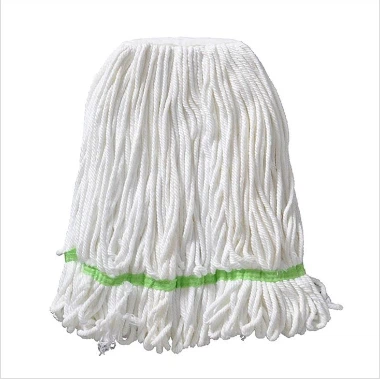
Components of Mop
A Mop Handle
This part of the mop holds all other components together. It can be made from various materials (such as metal or plastic). The handle will often have a grip or a trigger to activate the cleaning mechanism.
A Mop Head
This is what comes in contact with the floor and cleans it. The head can be made from different materials, such as cotton, microfiber, or sponge. It will attach to the end of the mop handle.
A Cleaning Mechanism
This is what activates the mop head and allows it to clean the floor. It can be a trigger, squeeze mechanism, or foot pedal.
A Bucket
This is what holds the dirty water (or cleaning solution) as you mop. The bucket will often have a handle for easy transport.
FAQ
We're well-known as one of the leading mop manufacturers and suppliers in China for over 20 years. Our factory offers high quality mop made in China with competitive price. Welcome to place an order.
-
![Super Absorbent 1200gsm twisted Loop Microfiber Car]() Super Absorbent 1200gsm twisted Loop Microfiber CarTwisted Loop Microfiber Drying Towel — a high-GSM, fast-drying car care essential for auto detailing studios, car washread more
Super Absorbent 1200gsm twisted Loop Microfiber CarTwisted Loop Microfiber Drying Towel — a high-GSM, fast-drying car care essential for auto detailing studios, car washread more -
![Kentucky Mop With 400g Cotton Head]()
-
![Manufacturer 330D/576F Blue & White 100% Polyester Microfiber Mop Yarn]() Manufacturer 330D/576F Blue & White 100% Polyester Microfiber Mop YarnManufacturer 330D/576F Blue & White 100% Polyester Microfiber Mop Yarnread more
Manufacturer 330D/576F Blue & White 100% Polyester Microfiber Mop YarnManufacturer 330D/576F Blue & White 100% Polyester Microfiber Mop Yarnread more -
![Microfiber Cloth For Car]() Microfiber Cloth For Carmicrofiber cloth for car, microfiber towel car cleaning,rags for cars, microfiber for car Wholesale hot sales carread more
Microfiber Cloth For Carmicrofiber cloth for car, microfiber towel car cleaning,rags for cars, microfiber for car Wholesale hot sales carread more


